
Research
Invasion Biology
The silent threat to biodiversity.
Biological invasions are among the most significant yet least recognised environmental challenges of the twenty-first century. Across tropical landscapes, invasive alien species are transforming ecosystems, threatening native biodiversity and undermining the benefits healthy ecosystems provide.
Bioinvasion usually progresses silently. Introduced species establish, spread and outcompete native flora and fauna, gradually altering ecosystem structure and function — suppressing forest regeneration, modifying soils, reducing habitat quality, disrupting food webs and altering hydrology. Over time, diverse native habitats become landscapes dominated by a handful of invasive species.
We treat bioinvasion not merely as the spread of non-native species but as a biodiversity crisis requiring scientific understanding, public awareness and coordinated action. Our work spans ecological research, invasive species monitoring, early detection, community participation, restoration and policy engagement.
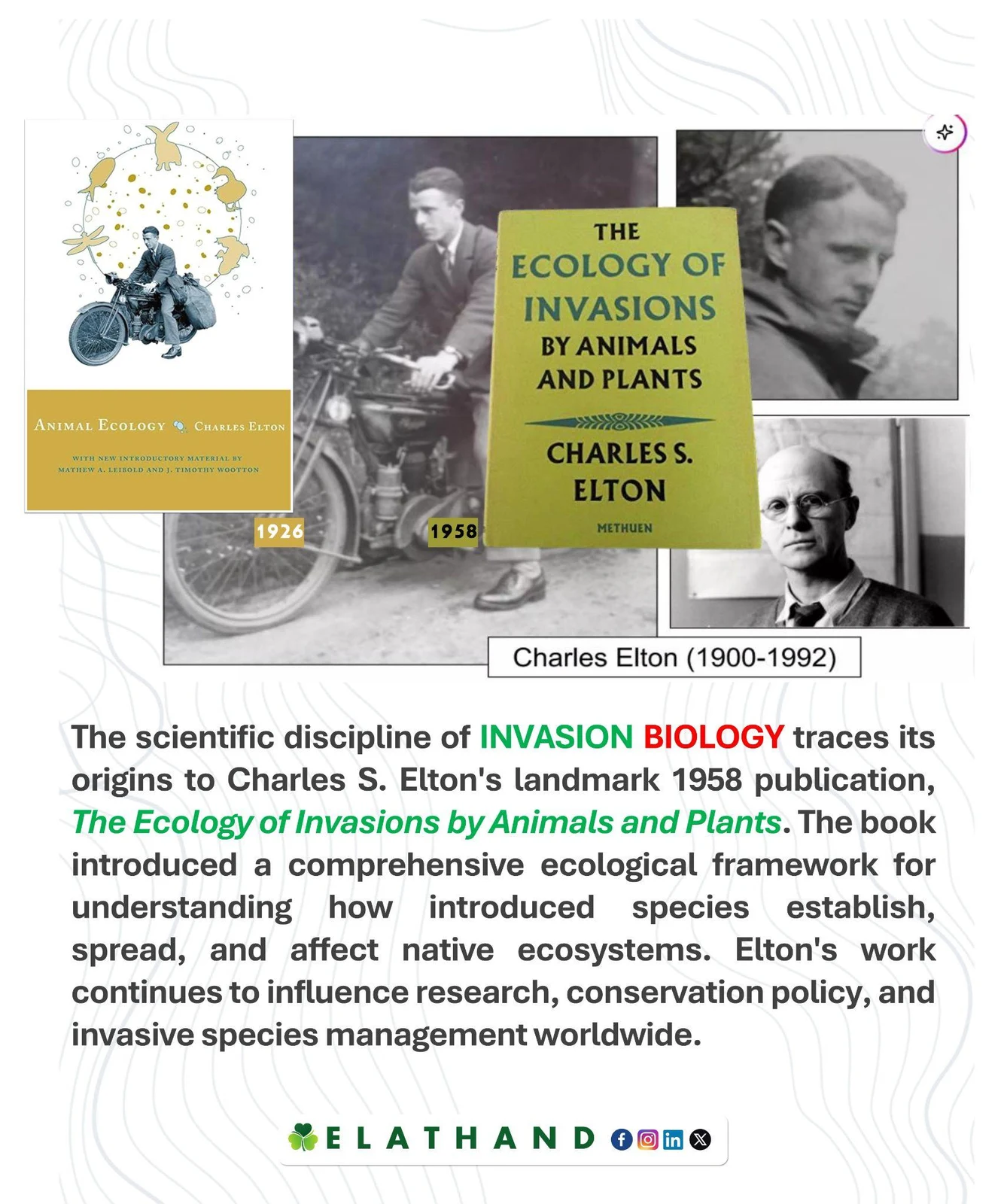
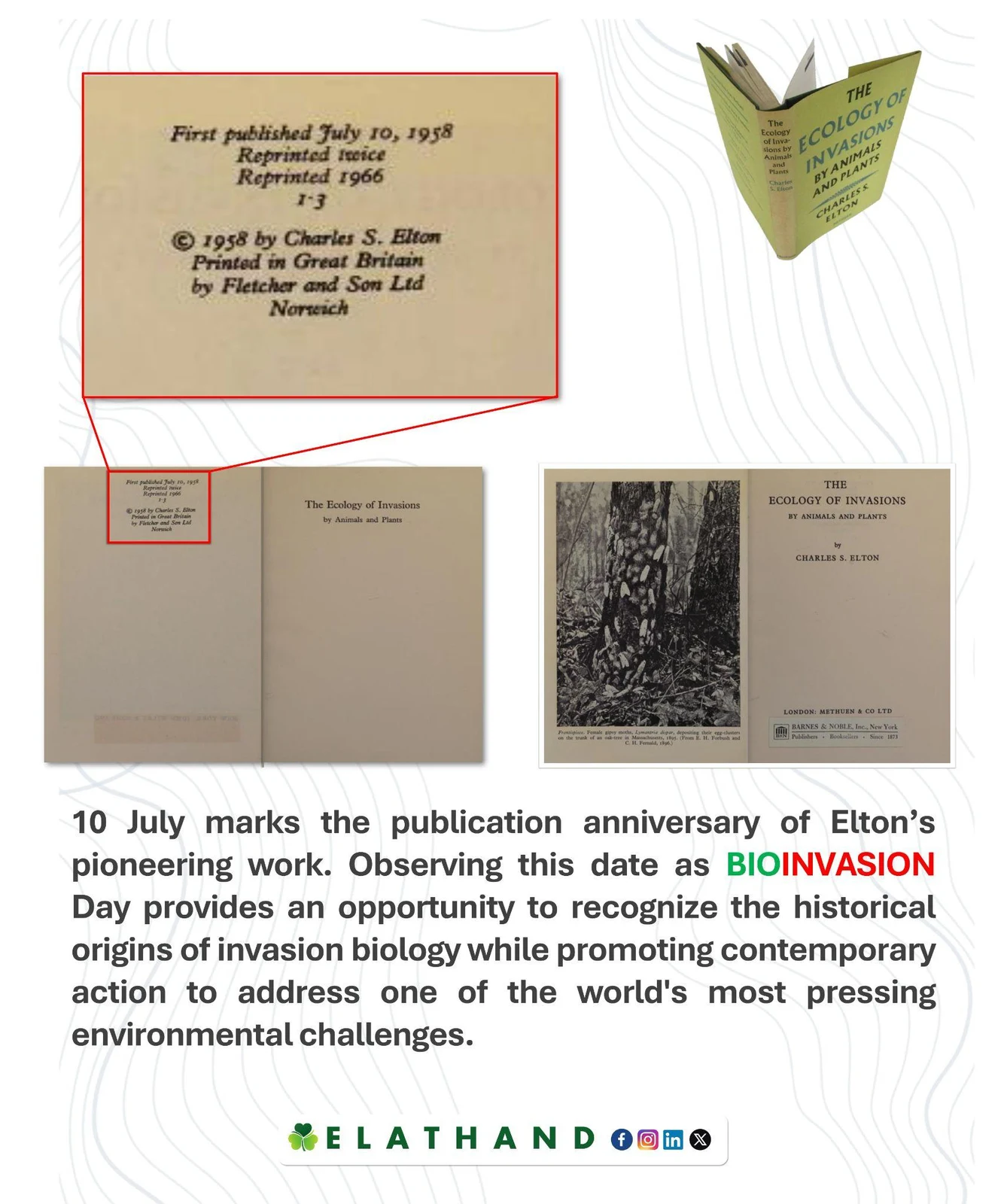
The discipline itself was established by Charles S. Elton, whose landmark book The Ecology of Invasions by Animals and Plants was published on 10 July 1958. More than six decades later it still guides research and management worldwide.
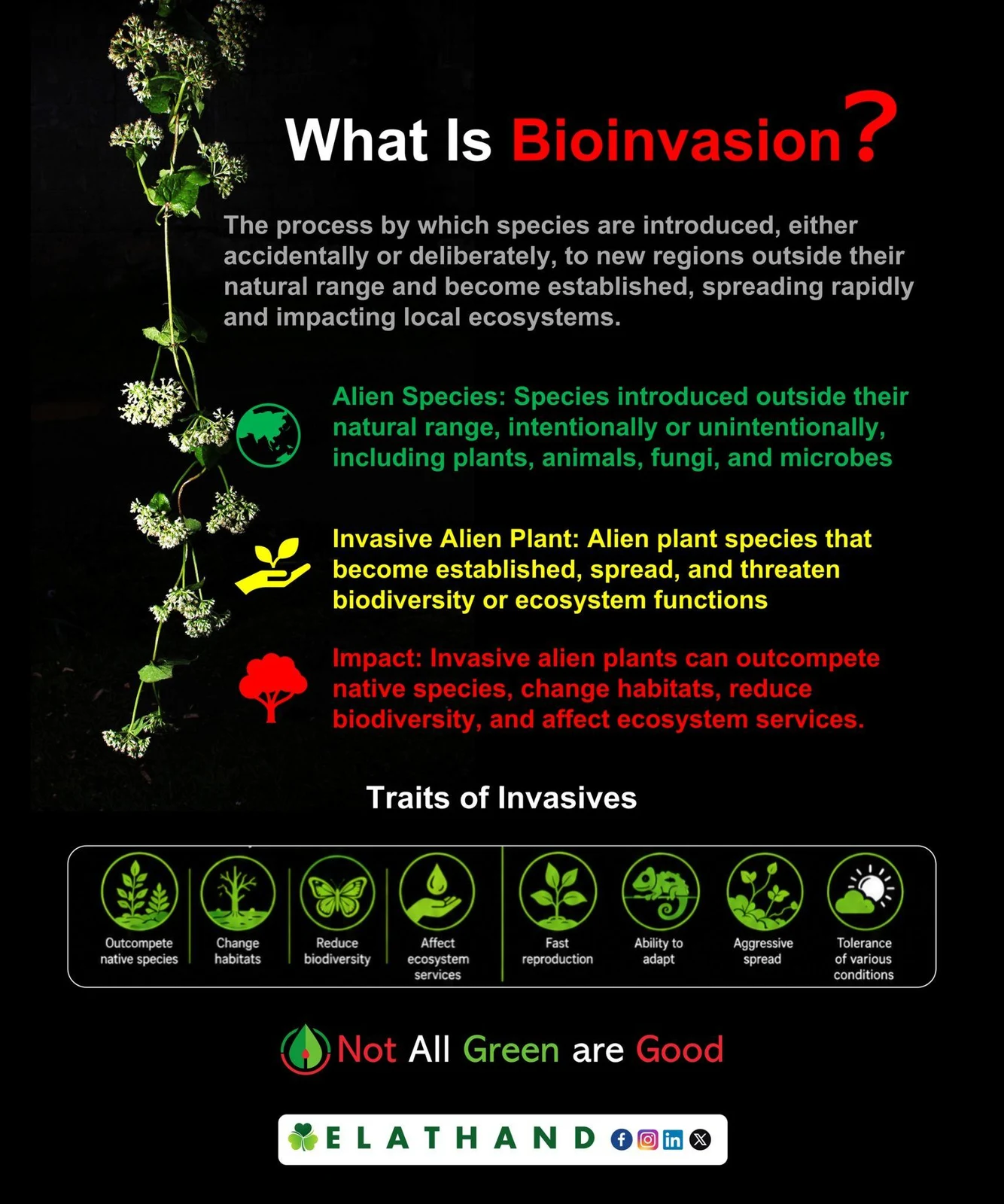
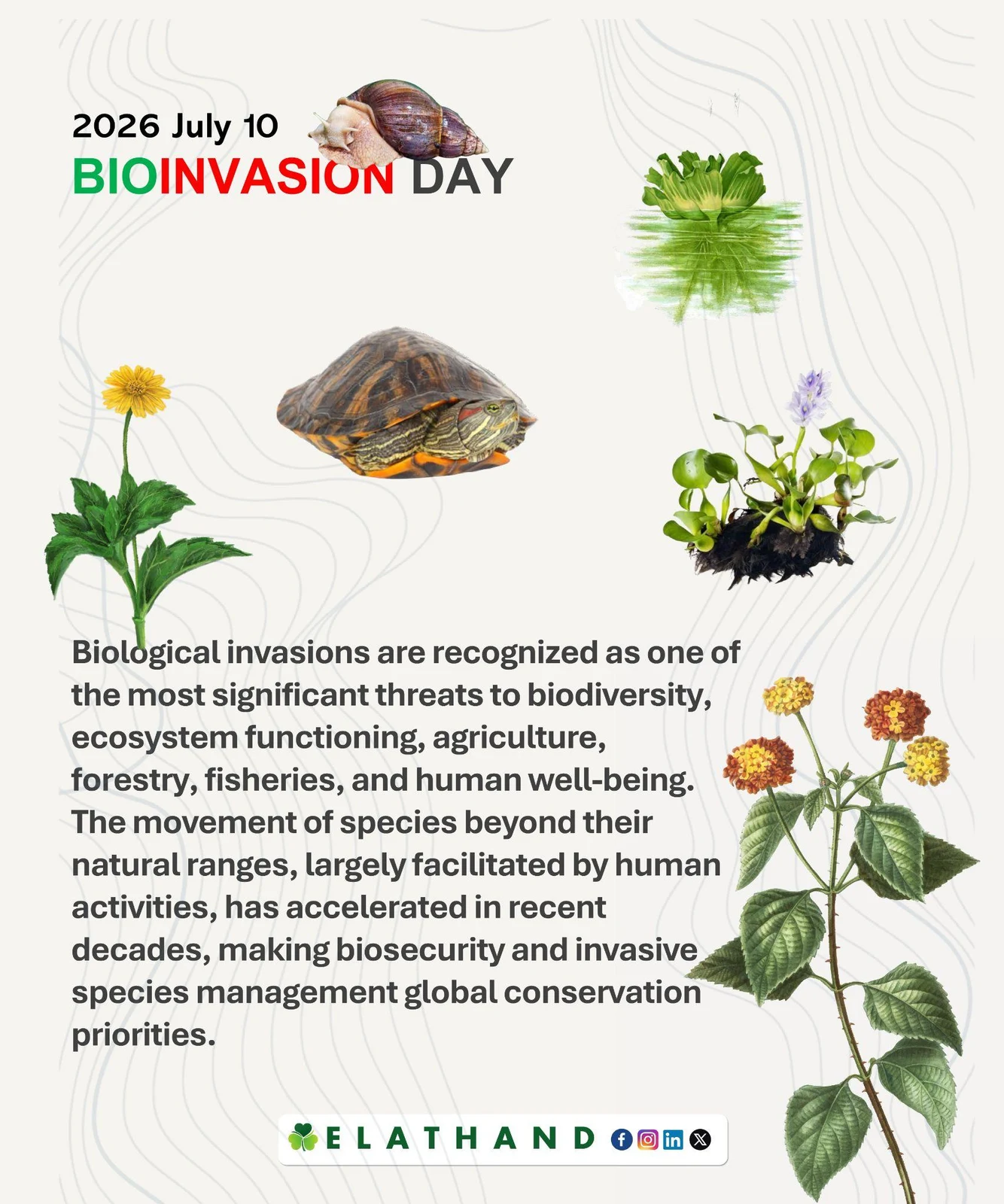
BIOINVASION DAY – 10 July
To strengthen global awareness of biological invasions, ELATHAND initiated the observance of BIOINVASION DAY on 10 July, commemorating the publication anniversary of Charles S. Elton’s pioneering work. The day serves as a platform to recognise the origins of invasion biology while encouraging scientists, conservationists, students, policymakers, institutions and communities to work together in preventing, monitoring and managing invasive alien species.
BIOINVASION DAY promotes scientific literacy, public engagement, ecological restoration, early detection of invasive species and the conservation of native biodiversity. It is a reminder that preventing biological invasions is far more effective than attempting to reverse their impacts after ecosystems have been degraded.
At ELATHAND, BIOINVASION DAY is more than a commemorative event: it is a call to action. By advancing research, fostering collaboration, empowering communities and inspiring responsible environmental stewardship, we aim to protect tropical ecosystems from one of the most pervasive and underestimated threats to biodiversity.
Projects
Flagship programmes where research, technology and community participation meet.
Conservation needs people, not just papers
Field surveys, restoration days, invasive species reporting, education programmes. Tell us where you are and what you can offer, and we will find a way for you to contribute.